

One-Foot-In, One-Foot-Out: How Mizzima Reports Under Surveillance in Myanmar
Interview with Mizzima Editor-in-Chief Soe Myint on reporting Myanmar’s post-coup civil war, navigating safety and ethics, and sustaining independent journalism
Exile journalism has become a defining feature of today’s global media landscape, as newsrooms increasingly operate across borders to survive political pressure and conflict. Since the military coup of February 2021, Myanmar has been ruled by a junta and plunged into a widening civil war marked by severe violence, sweeping repression of dissent, and sustained attacks on independent media, while access to reliable information has been sharply curtailed.
Against this backdrop, Mizzima, one of Myanmar’s most prominent independent newsrooms, offers an instructive case. The outlet operates transnationally while sustaining clandestine reporting inside the country through a cross-border “one-foot-in, one-foot-out” model.
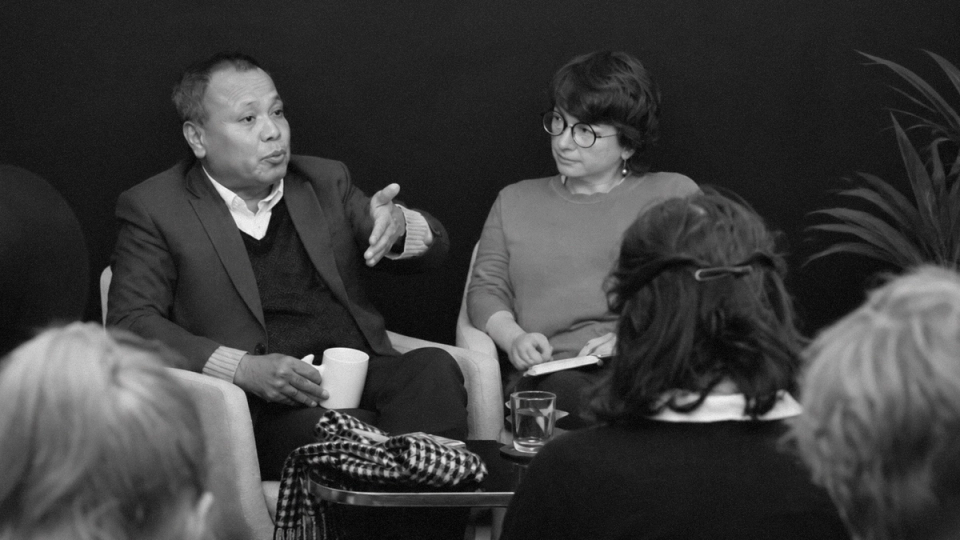
In this interview, journalist Angelina Davydova speaks with Soe Myint, Mizzima’s Editor-in-Chief, about the practical and ethical realities of reporting from inside Myanmar and from exile, the search for viable revenue models under conditions of displacement, lessons from Myanmar’s recent history, and the reasons the team continues to remain hopeful.
Would you call yourself an exile journalist?
No! Of course, I was in exile when Mizzima was founded in 1998. It was born in exile. We set it up in New Delhi, India. I was a refugee at the time. We started our work in an apartment in those days, that was 1998, 1999, 2000. But a lot of work has been set up inside the country from that time onwards.
After the coup, which took place in February 2021, we knew that the military junta would arrest us, that they would raid our head office in Yangon. So the first thing we did was to set up a temporary head office. We call it “in Karen State”, in Myanmar, which is across the Thai border. That area is not under the control of the Myanmar military.
In fact, as we speak, less than 50% of the country's territory is controlled by the junta. Many international reports say that they control only 20 to 40%. Whatever you believe, they definitely don't control at least half of the country's territories, which allows us, which allows Mizzima, which allows me personally, to work inside Myanmar.
Though, of course, we also have to work and set up outside the country. We have offices in New Delhi, India. We have offices in Chiang Mai and Maesot, which practically borders Myanmar. We also have offices in other countries, like Cambodia and Singapore. And of course, we have one small office set up in Prague. But these are a kind of financial and administrative management back-up for our operations inside Myanmar. So I would say we are one-foot-in, one-foot-out.
How many people work in the company now?
We currently have 63 employees. Half are under 35. 40% are women or LGBT+. There is some movement in the demographics. I am the only one who is nearly 60, a dinosaur on the way out. But the majority of those who lead and work in the organisation are young. About 20 of our employees work inside Myanmar; the rest are outside the country.
How do you maintain your reporting inside Myanmar, keep your readers and viewers, and sustain financial sustainability? Especially as many exile media struggle financially.
We have a lot of experience working under oppression and across borders — setting things up outside the country, then inside. We have years of experience in that cross-border work. We’ve learned a lot, and that makes us quite strong in terms of operations.
We stay in touch with laptops and phones with our colleagues and our systems allow us to see what work other people are doing. We publish with different bylines to protect the identities of those who live in areas under the control of the junta, or who live somewhere where their immigration status might be affected.
In terms of financial stability, Mizzima started with our own savings. We had support from international organisations and donors until we moved to our current business model in 2011. So, when the coup happened in 2021, we were already commercially sustainable, and we were ready with a parallel back-up broadcasting capacity over satellite when the military announced that our channel would be blocked. And we continue to broadcast by satellite, though we lost the advertising revenue altogether.
So now we are again requesting support from international communities. Though funding has changed: recently US funding was cut. Then Germany and Sweden will cut their funding to independent media in Myanmar. With all our experience, this has not been surprising.
So we have been working to create our own self-generated revenue in three or four ways. One is by monetising social media, as we have a huge social media presence. Another is organising events for other groups or organisations. Then we offer some business-to-business services, which bring in additional revenue. Finally, after 27 years in the media, we are starting to do some non-media business, including importing coffee from Myanmar through Thailand to Europe, which is one of the reasons we are in Prague. We have offices and accounting firms in seven countries, which we have set up in the last five years.
Even with all these various revenue streams, we still need to ask for support because our annual budget in 2021-2022 was about 2 million dollars. This funds the largest independent media network in the country.
I should add that we have become, especially since Covid, very flexible with people working from home or outside the office. This has many benefits for the employees, such as saving time commuting. We also encourage our employees to make money by starting their own social media accounts and creating talk shows of their own, which they can link to our social media. We understand some companies have stricter editorial standards and styles that might make this more difficult, but for us, it works.
Finally, we offer pretty much every kind of media except print, which we discontinued in February 2021. If you want video, we have video. If you want audio, we have audio. Even if you don’t have access to the Internet, you can access us.
The diversity of media products you create is truly amazing. We meet exile media from all over the world – Eastern Europe, the Middle East, South and Central America. What kind of advice could you offer to an exile media company that just started up recently?
For a person to be in exile is not something to wish for. It is a trauma and a dramatic departure. You might think that you will be back home in a few months, but that is not how it always works out.
With that said, my advice would be to learn from others and plan ahead. You don’t have to relearn what we learned and go through the same path for the same duration. We knew that the military would come down one day; they were withdrawing from the process. We just didn’t know when they would act. And so we planned this one-foot-in, one-foot-out approach. The military planned what they did and we planned for ourselves. Because, at the end of the day, we have to do our work.
You will face a lot of challenges as an independent media, so it is important to be innovative and flexible, especially in exile. This includes financial resources. For example, I was talking to a media manager from Russia who had a big television business. He can’t operate the same way here in Germany as inside of Russia, so he has to innovate. Yes, you need television. But how will you do this? Young people are very good at this – you need them. So I would say that you need to stay flexible, innovative, and smart enough so that you don’t spend resources trying to do things the way you would in your normal situation.
Also important are partnerships. We select our partnerships based on the values of democracy, human rights, independent media, and of course the desire for a reunion for our country. I think we have more than twenty partners inside Myanmar. Internationally we work with organisations from all over, such as the BBC, which we broadcast live. This gets them into Myanmar. Some people think, “how can I get broad financial support just for me?” But we get things done by networking, as well.
We have agreements with India, with Thailand. We have an MOU (Memorandum of Understanding) with Taiwan for radio. There are 100,000 Burmese living in Taiwan and nine or ten million Burmese in Thailand. So we do content sharing with these countries, which helps them and helps us. There is not always finance here at all. It can be content sharing, knowledge sharing, linking. Just getting dots connected. So these are examples of how partnerships and also global networks are very important. Very difficult regimes such as Iran or Russia work together, so why shouldn’t we? We are in very difficult situations, too.
As someone who has witnessed the development of Myanmar for many years, almost sixty years, as you say, you witnessed two coups, the junta coming, the junta leaving, democratic change, autocratic change again: What do you make of this history?
The struggle is always important because when we talk of democracy, democracy is not just done, not just there. You must exercise it, strengthen it. Especially for independent media. To keep democracy, you need a struggle. It is not a job for just twenty years or fifty years. You want freedom, you want liberty, you want these values; then it is a life-long journey.
So, yes, there were some ups and downs with limited democracy in Myanmar from 2012 to 2021, though it was very limited. Even supposing Myanmar had a full-fledged democracy tomorrow – which I don’t think would happen, it will take time – it would not be the end of the struggle.
You can have your own commitment to human rights, but you also have to be aware of the authoritarian regimes that live together and work together to suppress people. So, it is a fight. A fight for commitment. A fight ideologically, politically, and through work. The struggle will not end. There is no end as such. Suppose you don’t do this? What will happen? There will be more dictatorial regimes, more dictatorial practices, and repressive laws. It will not stop. Another dictator will arrive.
The good thing about the Burmese is that they have struggled a lot. They are resilient. They know what struggle and resilience mean. That is the good thing about life. You don’t get things granted. They don’t think that liberty is granted. They have seen it and they continue to fight against the repression.
And what gives you hope and what gives you energy?
Young people, particularly young people. I came from the student movement background. I was arrested for taking a photograph during the student protests. I thought studying at university wouldn’t have any risk, I didn’t properly understand it, and then I was arrested.
But I never graduated. At the time I was in university, studying international relations. That’s how the student uprisings broke out in 1988. But when I gradually moved to journalism work, I was not trained. The only journalism course I got was training given by one former head of the BBC Burmese in London who came to India. Of course, I was a refugee in India at the time. So, I was not trained, but we were able to do a lot.
Now things are changing. In the last nine years we set up a journalism course with the support from Germany and other countries. And we don’t just train those who will become journalists, we also train those who are already working in media houses. So, my hope is that these young people, who are smarter than us, and who see more than we saw – of course they have their different set of challenges from us – can go forward. So that is my hope.
Plus, I know that while I'm doing this job, others are also doing the same thing. I'm sure others are also fighting. Even though I might not meet the person and know about what they do. This happened during the military coup. You would meet people who had been up to the same thing you were doing separately. So that is the hope. The human being wants to be liberated. It is natural justice at the end of the day. The human being doesn't want things that are against justice. So, people are fighting and that is the hope.
In 1990 you and Htin Kyaw hijacked a Thai Airways Bangkok-Yangon flight, redirecting it to Calcutta in order to draw attention to the political situation in Myanmar. Looking back, knowing everything that followed, would you do it again?
It was worth doing. It was such a fun mission. But that kind of thing is not necessary now because things have changed. At the time there was no Internet or media. So now we need to do things differently and I am sure that is what these young people are doing. They pursue the same objective but in a different way. They’ll be able to get information in and out, to get the international community to understand, plus use media, which is very much needed.
The only thing I have been getting on my colleagues about is that you can’t just focus on your issue alone. This is democracy, this is human rights. So, you need to get all the dots connected. We might be good at what we are doing, but if we are not getting connected to others, then it’s not that efficient and doesn’t get much in the way of results.
Of course, about the hijacking in 1990 without using weapons: Basically, I was in the jungle in those days, I wanted to take up an armed struggle against the military junta. I was trained to be in the armed movement. Even though there were no weapons available at that time. I knew how to get explosives, and so on. But we decided not to use all this violence and weapons. Why? Because if you want to do something for yourself and others, then there is a need for a sacrifice. The sacrifice is to show others that you are doing something for whatever it is that you are committed to. So that is what we showed people. You get sympathy and you get empathy. You are doing things for good. If you are doing things for the country or society, you better not harm another person. There is no equation, though, between state actors and non-state actors. What about all this human rights discourse? One might say, these non-state actors are also violating human rights, so reports have to be condemned. I don’t equate that. A state actor is different. It’s not equal. So, we did it. We didn’t harm anyone. We didn’t use any weapons. And if something went wrong, then we would be the ones who would get hurt; we would sacrifice our lives. We are lucky enough that we stayed alive. Later I presented my case in court and I was acquitted.